
Hometown walks · Sants
A 60-minute walk through Sants
Sants was built by steam. Two big textile mills, the Vapor Vell and the Vapor Nou, made it an industrial town, and what came after them was shaped by the people who lived here: a park won from a factory site, a tram depot kept for the neighbourhood, a cooperative taken back after years as a nougat factory and a dance hall.
This walk is for people who live in Sants or nearby and use these places every day. It starts at Sants station and ends at the market, on flat ground, with six stops.
- Start
- Sants Estació (metro L3, L5), Plaça de Joan Peiró
- Finish
- Mercat de Sants, near Plaça de Sants metro (L1, L5)
- Distance
- 2.5 km, one way
- Time
- About 60 min: 33 min walking, 6 stops
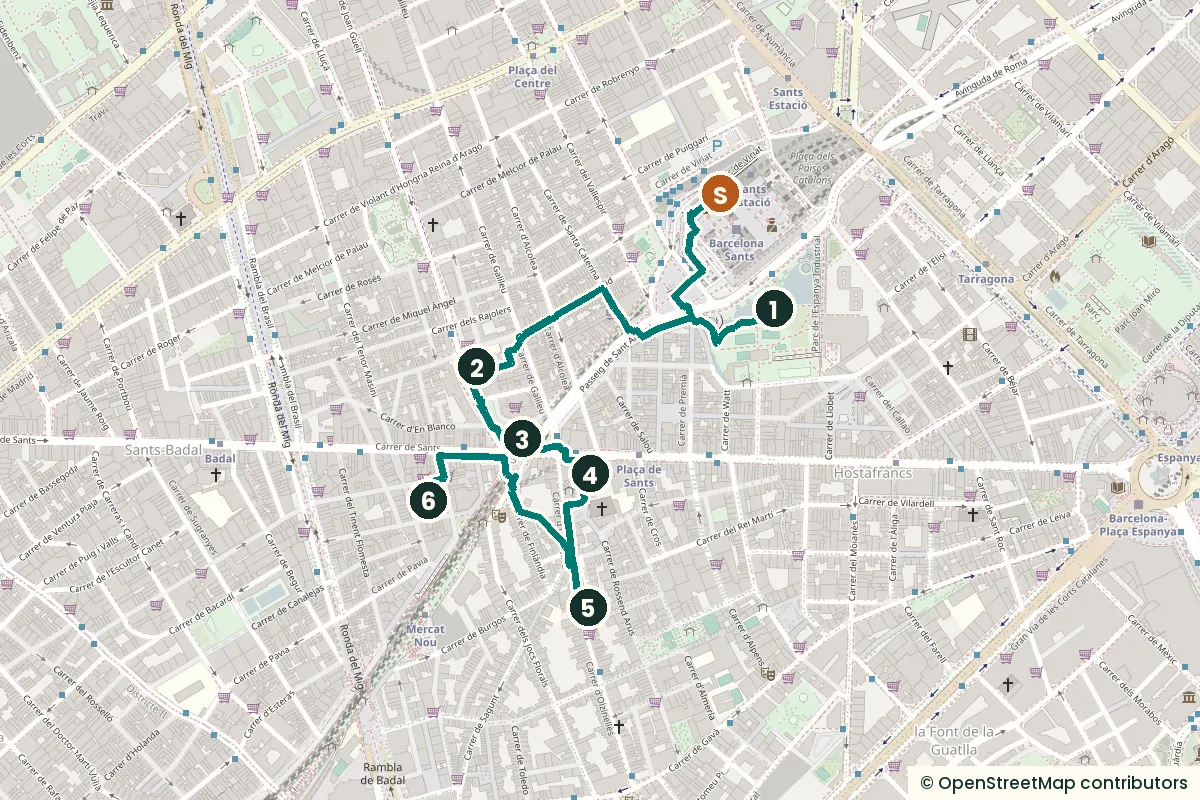
The stops
-
Parc de l'Espanya Industrial, on the Vapor Nou's land
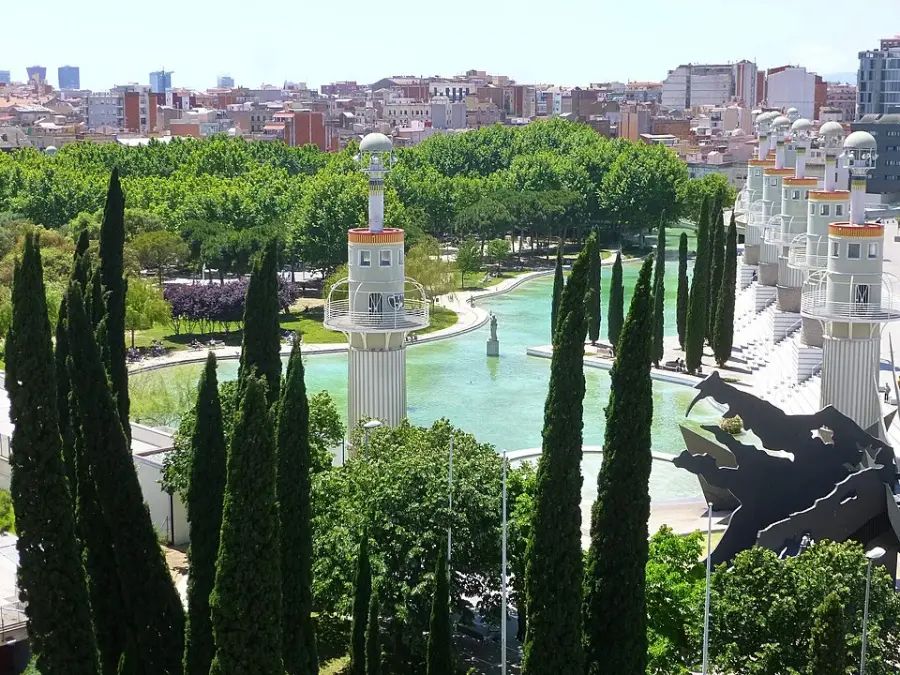
Photo: Zarateman, CC0, via Wikimedia Commons. This park sits on the site of the Espanya Industrial, the textile mill locals called the Vapor Nou, the New Steam Mill. In 1842 six Muntadas i Campeny brothers acquired the land, on the old boundary between Sants and Barcelona, and the factory once employed 1,170 workers. Production moved to Mollet del Vallès in 1972, and the mill closed in 1981. In 1979, after years of neighbourhood demands, the city bought part of the land for a park. It opened on 26 October 1985 and won that year's FAD architecture prize. Look for the nine lighthouse towers, the rows of steps down to the lake, which at 10,000 square metres is the second largest in the city, Andrés Nagel's dragon sculpture, and a Neptune made by Manuel Fluxà in 1881. The sports hall next door hosted weightlifting at the 1992 Olympics.
Sources: Viquipèdia, Parc de l'Espanya Industrial; Viquipèdia, Vapor Nou (L'Espanya Industrial).
-
Vapor Vell, the first steam mill
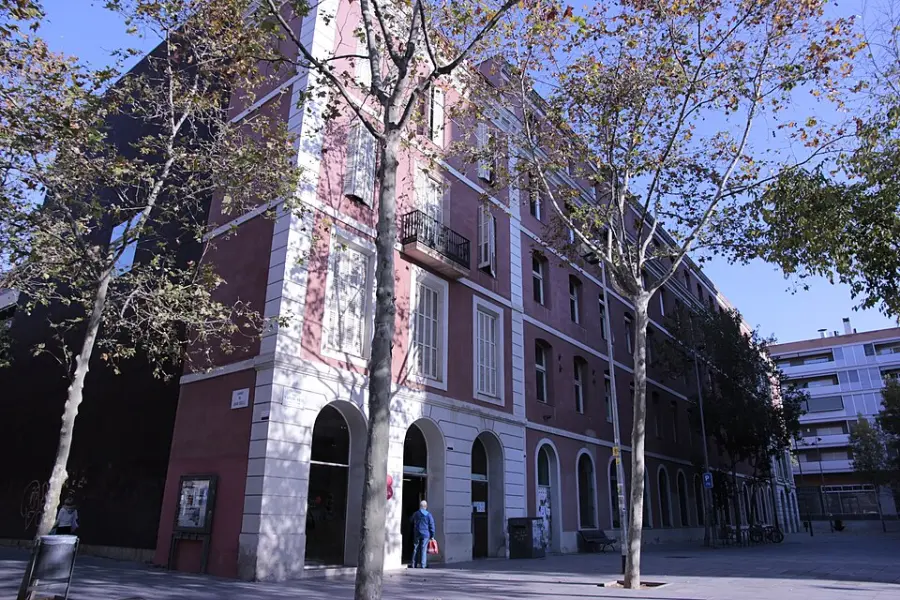
Photo: Nenagamba, CC BY-SA 4.0, via Wikimedia Commons (resized). The Vapor Vell was the first large steam factory in the old town of Santa Maria de Sants. Joan Güell i Ferrer bought the plot on 24 February 1844, and from 1846 the mill made cotton corduroy and velvet. It was first called the Vapor Güell; when the Espanya Industrial opened, people started calling that one the New Mill and this one the Old. On 2 July 1855, during Catalonia's first general strike, the factory director Josep Sol i Padrís was shot dead after a meeting with the workers. The mill closed in 1890, when Eusebi Güell moved the business towards the Colònia Güell. In 1897 the local filmmaker Fructuós Gelabert shot Baralla en un cafè in its courtyard, considered the first fiction film made in Spain. The first stone of the district library was laid here on 28 February 1998. The tall octagonal chimney still stands, and the square beside it was dedicated in 2023 to the women who worked in the mill. Inside, the library keeps more than 4,000 demo recordings of Barcelona music from the 1980s onwards.
Sources: Viquipèdia, Vapor Vell (Sants); Biblioteques de Barcelona, Biblioteca Vapor Vell; OpenStreetMap, Plaça de les Treballadores del Vapor Vell.
-
Plaça de Sants
The square was laid out in 1946, when the railway station next to it opened, and trams had their final stop here. It was first named after Salvador Anglada, an organiser of the employers' Sindicat Lliure union who was shot by firing squad in August 1936, and took its current name in 1979. It rises slightly above the rest of the street to cross the railway. In 1967 the city approved an overpass above it; in the 1970s the neighbourhood campaign "Salvem Sants dia a dia", Save Sants day by day, stopped it. The fountain known as the Font del Vell, by Damià Campeny, an allegory of the Llobregat river, was placed here in 1975. El Ciclista by Jorge Castillo followed in 1986, for the 75th anniversary of the Volta Ciclista a Catalunya, the cycling race organised by the local Unió Esportiva de Sants.
On the way to the next stop you walk along Carrer de Sants. It follows the old royal road to Madrid, and its origin goes back to a coastal branch of the Roman Via Augusta.
Sources: Viquipèdia, Plaça de Sants; Viquipèdia, Carrer de Sants.
-
Cotxeres de Sants, the tram depot
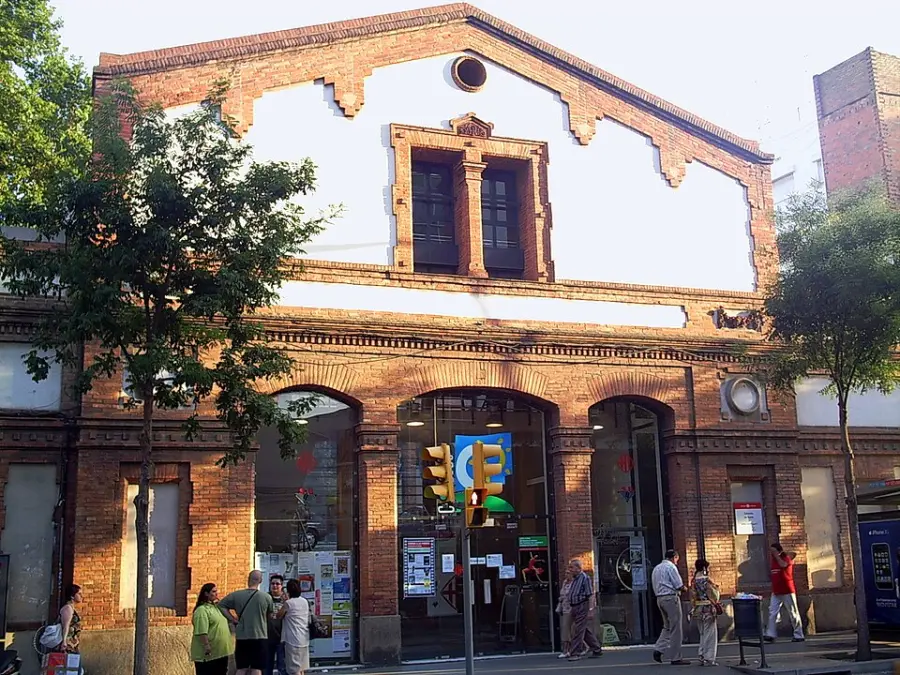
Photo: Friviere, CC BY-SA 3.0, via Wikimedia Commons (resized). In 1875 a new tram line pulled by mules and horses linked the Pla de la Boqueria with Sants and Hostafrancs, and this depot, designed by Tiberi Sabater i Carné, was built for it. From 1904, when electricity replaced the animals, a new tram shed went up where the stables had been, and it was extended again in 1929. The depot fell out of use in 1968. The plan was to turn it into a tram museum, but neighbours wanted a public space for the barri, and the first public area opened in 1977. After a restoration by the architect Ricard Perdigó i Nardiz, the civic centre opened in 1984. It now hosts some of the neighbourhood's best-known events, including the Sants chess open and a marathon of fantasy and horror films.
Source: Viquipèdia, Cotxeres de Sants.
-
La Lleialtat Santsenca, the cooperative
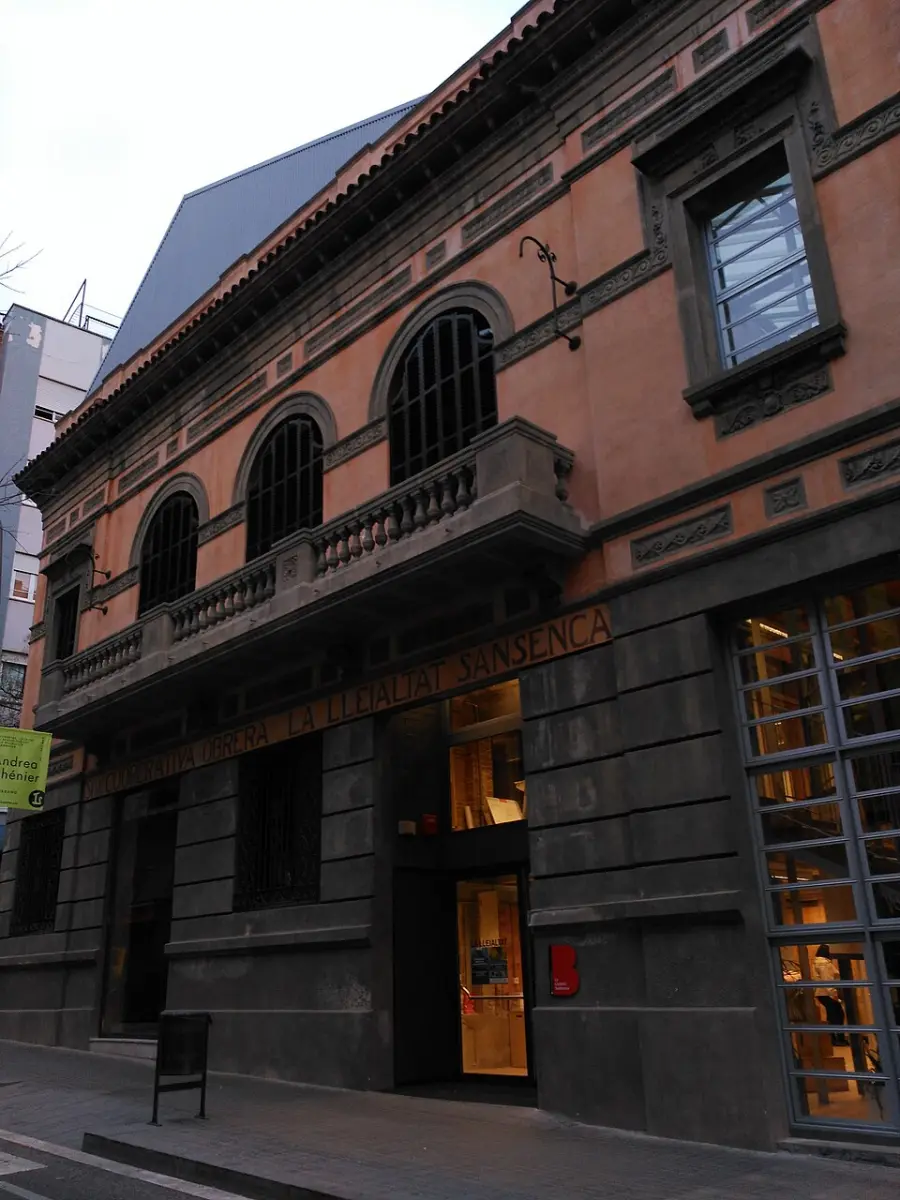
After the 2017 restoration. Photo: Vàngelis Villar, CC BY-SA 3.0, via Wikimedia Commons (resized). The Lleialtat, "loyalty", was founded on 22 October 1891 as a consumer cooperative: workers who joined together to buy food more cheaply. This building dates from 1928 and was designed by Josep Alemany i Juvé, who also designed the facade of El Molino on the Paral·lel. Under Franco the building was expropriated; the cooperative reopened in 1941 under Falange supervision, was absorbed by another cooperative two years later, and was dissolved in the 1950s. A nougat factory moved in, and later a dance hall called the Bahia, the name many neighbours still use. The city closed it in 1988. In December 2009 local groups started a campaign to win it back, and sixty neighbourhood organisations helped draw up a plan for the building. It was rebuilt between 2014 and 2017 and opened in January 2018, run by a coalition of local groups.
Sources: Viquipèdia, Lleialtat Santsenca; Ajuntament de Barcelona, La Lleialtat Santsenca; Centres Cívics de Barcelona.
-
Mercat de Sants, the market
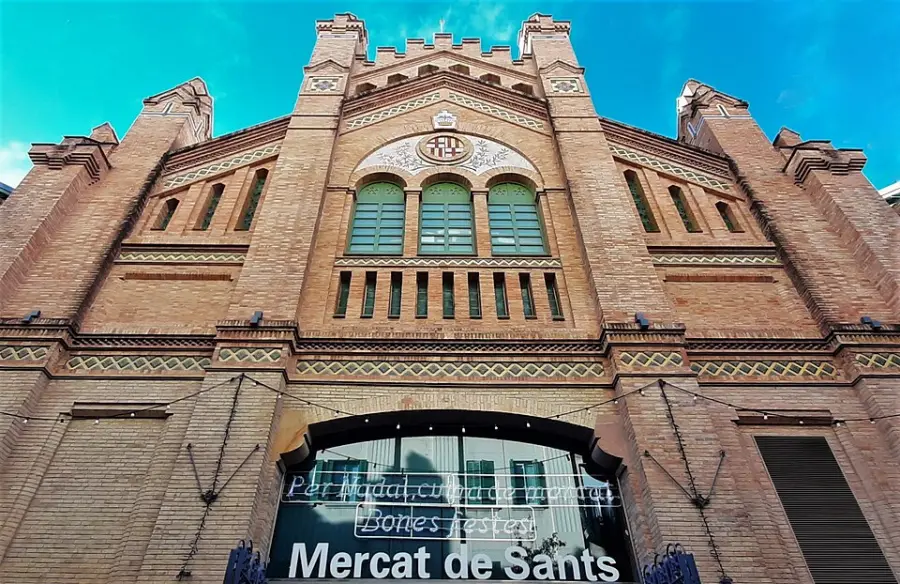
Photo: Martinge636, CC BY-SA 4.0, via Wikimedia Commons (resized). The market began in the mid-1800s in the open air on Carrer del Sant Crist. It moved twice: first to land given by the Salat family, today's Plaça d'Osca, then to an old vegetable garden known as the "hort nou". That is why people called it the Mercat Nou, the name the nearby metro station took. The covered market, designed by the city architect Pere Falqués, opened on 20 April 1913. It is an exposed-brick building in three sections; the taller centre has three arched windows under a mosaic of the city's old coat of arms. A renovation by the studio Pb2, led by Josep Llobet i Bach, ran from 2009 to 2014 and kept the historic facade. The building is listed as local heritage.
Sources: Mercats de Barcelona, Mercat de Sants; Coneix BCN, Mercat de Sants; Viquipèdia, Mercat de Sants.


.jpg)
Practical details
- Getting there
- Sants Estació: metro L3 and L5, and Rodalies R1, R2, R3, R4 and RG1. Start at the Plaça de Joan Peiró side.
- Length
- 2.5 km one way, about 33 minutes of walking. Allow an hour with the stops.
- Terrain
- Flat: every stop is between 33 and 43 m above sea level. The park is sunken, with steps down from the street.
- Coffee
- Cafès Caracas, Carrer de Sant Medir 12, a minute from the market.
- Getting home
- Plaça de Sants metro (L1, L5) is about 240 m, three minutes, from the market.
- Nearby
- Want more factories? See the Poblenou chimney walk. The market's architect also built Poblenou's water tower.
Walking distance and times from the OSRM foot router on OpenStreetMap data. Elevations from Open-Meteo. Checked 15 September 2026.
Walk it with Strolio
Open Strolio at Sants station and ask for an hour through the neighbourhood's industrial past. Stories play as you reach each place, and you can ask about anything else you pass, by voice or with a photo.
Sources
- Biblioteques de Barcelona: Biblioteca Vapor Vell
- Ajuntament de Barcelona: La Lleialtat Santsenca
- Centres Cívics de Barcelona: La Lleialtat Santsenca
- Mercats de Barcelona: Mercat de Sants
- Coneix BCN: Mercat de Sants
- Viquipèdia: Parc de l'Espanya Industrial, Vapor Nou (L'Espanya Industrial), Vapor Vell (Sants), Plaça de Sants, Carrer de Sants, Cotxeres de Sants, Lleialtat Santsenca, Mercat de Sants, Estació de Barcelona-Sants
- Map data and places: © OpenStreetMap contributors, ODbL
- Photos: Wikimedia Commons contributors Zarateman, Nenagamba, Friviere, Vàngelis Villar and Martinge636, credited under each photo